

Mice create mental maps like humans, reveals study led by Prof. Maurício from the PPGFSC


Mice tested in the study were able to create mental maps without using visual references. Photo: Reproduction/Getty Images
Have you ever tried walking in the dark and, even without seeing, managed to find your way? This happens because the human brain is capable of calculating where we are based on our own movements, without relying on visual reference points like signs or buildings.
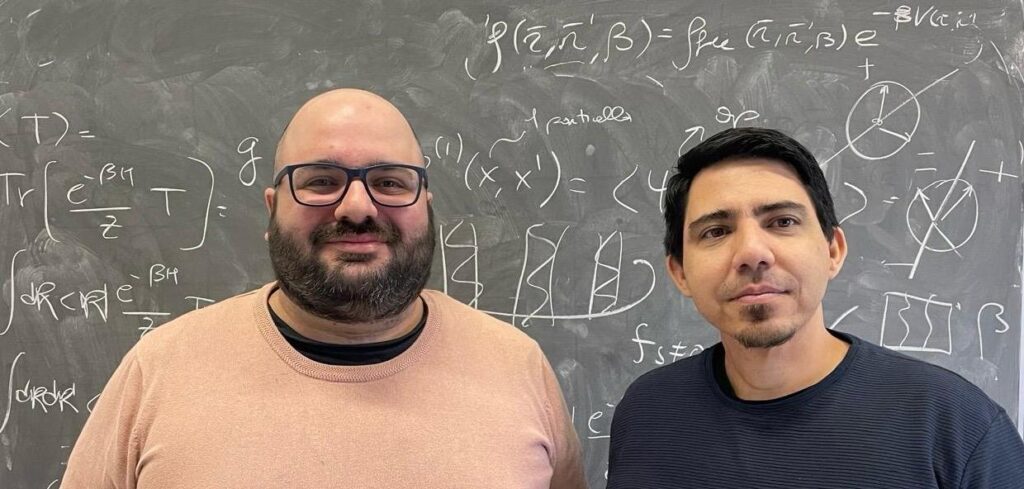
A study led by Professor Maurício Girardi-Schappo from the Neurophysics Lab, from the Department of Physics at the Federal University of Santa Catarina (UFSC), revealed through experimental tests that, like humans, mice are capable of creating mental maps without using visual references.
According to the international biology journal eLife, where the research was published in November 2024, the documentation of animals’ ability to build cognitive maps is “something rarely, if ever, reported outside the literature on human beings.” The journal also classified the work as “fundamental” for the advancement of fields such as biology, neuroscience, and cognitive psychology.
The study was developed in collaboration with researchers Leonard Maler, André Longtin, and Jean-Claude Béïque, and with doctoral student Jiayun Xu from the Center for Neural Dynamics and Artificial Intelligence at the University of Ottawa, in Canada.
According to Professor Schappo, the discovery contributes to breaking the premise that humans occupy a “privileged position” both within the universe and among different animal species. “For centuries, science has been deconstructing this idea, but in recent decades we’ve begun to have better tools to dismantle it,” he says.



 Na sequência da viagem, Renné, Raphael e Lucas foram até a cidade de Xi’an, famosa cidade histórica na China, conhecida por ter sido o ponto de partida da rota da seda e por abrigar as estátuas do exército de terracota, reconhecidas pelo UNESCO como Patrimônio Mundial. Em Xi’an, nossos peregrinos participaram de uma conferência com mais de mil pessoas, a CIOP 2023 (The 14th International Conference on Information Optics and Photonics), onde apresentaram oralmente seus trabalhos desenvolvidos na UFSC para um público de maioria chinesa e fizeram importantes contatos para potenciais novas colaborações internacionais.
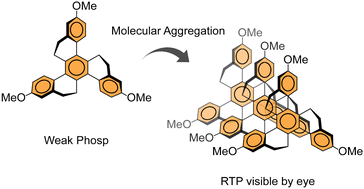 Considering the relevance of room temperature phosphorescent (RTP) materials, we discuss the influence of donor and acceptor groups substituted on to a twisted three-fold symmetric hydrocarbon homotruxene, which presents a persistent RTP, even in the absence of donor or acceptor moieties, under ambient conditions as a result of the twisted π-system. Compared to a fluorine acceptor, a donor methoxy group increases the phosphorescence decay rate in solution, while in the solid-state, molecular aggregation and packing yield a very persistent phosphorescence visible by the eye. The RTP of the intrinsically apolar homotruxene is found to be modulated by polar substituents, whose main impact on the solid-state emission is due to altered packing in the crystal.

