 O PROGRAMA DE PÓS-GRADUAÇÃO EM FÍSICA convida para o seminário:
Virial theorem and nucleon mass structure
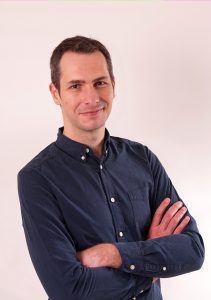
Prof. Dr. Cédric Lorcé
Centre de Physique Théorique – École Polytechnique, France
*Evento de presença obrigatória da disciplina seminários
Abstract: We review the concept of the virial theorem in various physics frameworks, with a focus on quantum field theory. Having clarified its physical content, we show how it can shed light on the recent debates about the nucleon mass decomposition.
References:
Energy-momentum tensor in QCD: nucleon mass decomposition and mechanical equilibrium. C. Lorcé, A. Metz, B. Pasquini, S. Rodini, JHEP 11 (2021) 121, arXiv:2109.11785 (Key sections: II, IV and Appendix A).
Data: 15 de setembro de 2023 (sexta-feira) – Horário: 10h15min
Local: Sala virtual do ConferênciaWeb da Rede Nacional de Pesquisa: https://conferenciaweb.rnp.br/ufsc/ppgfsc-ufsc
Link de acesso ao canal do programa no youtube: https://youtube.com/live/ZsQgXc-sM9w
Agenda de Seminários: https://ppgfsc.posgrad.ufsc.br/seminarios/
 O PROGRAMA DE PÓS-GRADUAÇÃO EM FÍSICA convida para o seminário:
À Espera da Próxima Terrível Lestada
Prof. Dr. Reinaldo Haas
Departamento de Física, UFSC
*Evento de presença obrigatória da disciplina seminários
A história da Ilha de Santa Catarina sempre esteve cercada por eventos meteorológicos conhecidos como “Terríveis Lestadas”. Apesar da falta de dados disponíveis, é possível formular hipóteses sobre as razões termodinâmicas, sinóticas e climáticas que contribuem para a intensificação desses eventos destrutivos. Essas condições podem ser simuladas em modelos e testadas com base em ocorrências recentes de Lestadas. Esse foram caracterizadas por nuvens “quentes”. Neste seminário, serão apresentadas evidências de que esses eventos estão ressurgindo, embora agora influenciados por fatores diferentes que têm o potencial de produzir estragos ainda maiores.
Data: 01 de setembro de 2023 (sexta-feira) – Horário: 10h15min
Local: Sala virtual do ConferênciaWeb da Rede Nacional de Pesquisa
https://conferenciaweb.rnp.br/conference/rooms/ppgfsc-ufsc/
Link de acesso ao canal do programa no youtube: https://youtube.com/live/y0xWHp3bunY
Agenda de Seminários: https://ppgfsc.posgrad.ufsc.br/seminarios/
 O PROGRAMA DE PÓS-GRADUAÇÃO EM FÍSICA convida para o seminário:
Turning green light into blue and poor TADF molecules into something special
Prof. Andrew Paul Monkman
Physics Department, University of Durham – UK
*Evento de presença obrigatória da disciplina seminários
Abstract:
DMAC TRZ is a very typical green thermally activated delayed fluorescence emitter. Assumed to be very well characterized in the literature, giving OLEDs with EQE well above 25% through enhanced out-coupling as the molecule self-orients when deposited by vacuum deposition. Thus, a good OLED emitter nothing exceptional so let’s move on to something else. Well, hang on a minute, that’s not all, in fact as we will show in this talk, this is far from the end of the story, if you are prepared to look. And we did! We noticed that when we used DMAC TRZ as a sensitizer for v-DABNA, a so called MR-TADF narrow line width emitter, we managed to generate pure blue light, i.e. we turned green DMAC TRZ emission into pure blue emission. After a bit of head scratching we concluded that either the FRET sensitization was immaculate or something new was going on with DMAC TRZ. After looking hard we found something rather strange, a second high energy emitting state in DMAC TRZ, which is a weak charge transfer state, and looks very much like an axial conformer, i.e. the donor is folded out of the plane of the acceptor compared to the more usually rotated through 90o twisted equatorial conformer that gives rise to the strong green CT state. We have reported on such axial and equatorial conformers before in DPTZ-DBTO2 but these state come about because of the buckled configuration of the phenothiazine donor units. Whereas in DMAC TRZ the acridine units are planar. So, what causes these conformers in DMAC TRZ, what new photophysics do they give and are they involved in the sensitization step to v-DABNA to give efficient pure blue emission. We will try to explain all in the talk!
Data: 25 de agosto de 2023 (sexta-feira) – Horário: 10h15min
Local: Sala 212 – Auditório do Departamento de Física
Agenda de Seminários: https://ppgfsc.posgrad.ufsc.br/seminarios/

 O PROGRAMA DE PÓS-GRADUAÇÃO EM FÍSICA convida para o seminário:


