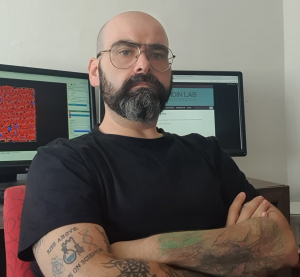
Seminar with professor Marcos Kendi Yamasaki – June 7, 2019 (friday) – 10:15 a.m.

03/06/2019 09:09

THE PHYSICS GRADUATE PROGRAM invites everyone to the seminar:
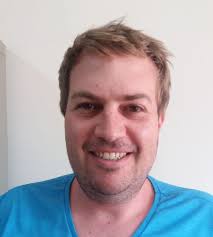

Distribuição nuclear em matéria estelar para modelagem de supernovas

Marcos Kendi Yamasaki
Doutorando PPGFSC/UFSC

Abstract:

Neste seminário abordarei a distribuição nuclear da matéria estelar para modelar supernovas quando a captura de elétrons é considerada. Supernovas são fenômenos raros e de difícil observação, por isso faz-se necessário o uso de simulações computacionais para estudar toda a física envolvida. Com o objetivo de otimizar o tempo computacional de tal simulação, foi imposto um corte na probabilidade considerando os núcleos mais importantes. Parte do seminário será dedicada a relatar a experiência acadêmica e pessoal de se realizar um doutorado sanduíche.

Date: June 7, 2019 – (friday) – Place: Sala 212 – Auditório do Departamento de Física – Time: 10:15 a.m.

Tags: evento obrigatórioseminário

Seminar with professor Dr. Juan Mauricio Torres Gonzalez – May 24, 2019 (friday) – 10:15 a.m.

20/05/2019 10:41

THE PHYSICS GRADUATE PROGRAM invites everyone to the seminar:

Atomic entangling operations assisted by multiphoton states

Dr. Juan Mauricio Torres Gonzalez
IFUAP/IF – México

Abstract:

We propose and theoretically investigate the implementation of entangling operations on two two-level atoms using cavity-QED scenarios. The atoms interact with optical cavities and their state is postselected in a noninvasive way by measuring the optical field after the interaction. We show that the resulting quantum operation can be exploited to implement quatum information protocols such as entanglement purification and a Bell state measurement. In contrast with previous purifications schemes, a fidelity larger than one half with respect to any Bell state is not a necessary condition.

Date: May 24, 2019 – (friday) – Place: Sala 212 – Auditório do Departamento de Física – Time: 10:15 a.m.

Seminar with professor Renné Luiz Câmara Medeiros De Araujo – May 17, 2019 (friday) – 10:15 a.m.

13/05/2019 10:16

THE PHYSICS GRADUATE PROGRAM invites everyone to the seminar:

Osciladores Óticos: passado, presente e futuro

Renné Luiz Câmara Medeiros De Araujo
UFSC/FSC

Abstract:

Osciladores Óticos são dispositivos capazes de gerar ondas luminosas coerentes. Incluem-se aí, por exemplo, os lasers e os Osciladores Paramétricos Óticos (OPOs), principais temas deste seminário.
O laser nasceu na década de 1960 para revolucionar nossa capacidade de sondar a interação da luz com a matéria. Ainda na mesma década, surgiu o primeiro OPO, um tipo de fonte luminosa versátil de comprimento de onda sintonizável. Hoje, o laser e o OPO são ferramentas básicas de pesquisa e a presença do laser em diversas tecnologias cotidianas é notória. O OPO, por sua vez, com suas características não-clássicas, é usado para melhorar a precisão detectores de ondas gravitacionais e compõe arquiteturas de comunicação e computação quânticas.
Neste seminário, contarei um pouco desta história, ressaltando as propriedades quânticas da luz e apontando a direção em que caminham as pesquisas atuais na área.

Date: May 17, 2019 – (friday) – Place: Sala 212 – Auditório do Departamento de Física – Time: 10:15 a.m.

Seminar with professor Miguel Henrique Boratto – May 10, 2019 (friday) – 10:15 a.m.

06/05/2019 18:08

THE PHYSICS GRADUATE PROGRAM invites everyone to the seminar:


From Transistors to Switchable Memories: Development of Memristors for Data Processing
Miguel Henrique Boratto
Pós-doutorando – UFSC/FSC

Abstract:

The evolution of data-processing is dynamic and keeps changing the way we live nowadays. The device that immensely contributed for this advance, since the 1950s, is the transistor, the key of the evolution of electronic components. The great improvement of these devices has allowed the fabrication of small size and high-speed data-processing electronic equipment, such as the smartphones, million times faster than old computer machines. The commercial Random-Access Memory (RAM) is volatile, fabricated with a series of transistors and capacitors. A certain performance saturation has been achieved in these memories due to its volatile characteristic but also caused by the low performance of data transfer between the RAM and processing and storage units. A way to overcome such inertia is changing and exploring new architectures and materials such as the memristor, a non-volatile resistive switchable memory, that presents a simpler architecture with the necessary characteristics to substitute the transistor in data processing and storages [1,2]. The use of memristors may eliminate the use of three units (RAM, permanent storage, and processing) by doing all work simultaneously, avoiding the loss of processing speed caused by the transfer of data between units.
In this seminar, I will present a brief history of transistor and the differences between RAM and storage units. An emphasis will be given on the characteristics of memristors, as well as some state-of-the-art results obtained so far in the literature.
[1] M.H. Boratto, et al, Applied Surface Science, 410, 278-281, 2017. Doi: http://dx.doi.org/10.1016/j.apsusc.2017.03.132
[2] J.J.Yang et al, Nature Nanotechnology, 8, 13-24, 2013. Doi: 10.1038/NNANO.2012.240

Date: May 10, 2019 – (friday) – Place: Sala 212 – Auditório do Departamento de Física – Time: 10:15 a.m.

Seminar with professor Rodney Marcelo do Nascimento – May 3, 2019 (friday) – 10:15 a.m.

29/04/2019 10:55

THE PHYSICS GRADUATE PROGRAM invites everyone to the seminar:

A New Experimental-3D Physical Modeling Approach Predicting Favorable Biomaterial-Cell Interactions
Rodney Marcelo do Nascimento
Pós-doutorando – UFSC/FSC

Abstract:

Despite several decades of research on biomedical implant materials, the identification of predictive and robust in vitro characteristics of cell support ability and viabilities—as indicators of biocompatibility and future implant-tissue integration—remain elusive. This study addresses the phenomenology of cell implant interfaces based on experimental, theoretical and numerical analysis of cell response to functionalized bioceramic coatings of commercial titanium implants, cp-Ti. A variable spectrum of coatings having differing surface wettabilities, with optimized solid tension values, was obtained. Measured values were modeled and correlated to cell support ability and viabilities. The contributions of different physico-chemical aspects to cell viability were decoupled resulting in the identification of the polar component of the surface free energy as a significant and major cell-substrate effector. Furthermore, our results and the suggested model establish the thermodynamic interfacial free energy as an omnipotent measure that can be fully correlated to the morphology of an individual cell under numerical simulation matching empirical observations. Collectively, the 3D physical modeling reported herein can offer a new generic theoretical framework, using implementable mathematical simulation, towards the objective of rational biomaterial design that can improve next generation metal and ceramic implants.

Date: May 3, 2019 – (friday) – Place: Sala 212 – Auditório do Departamento de Física – Time: 10:15 a.m.

Facebook Auto Publish Powered By : XYZScripts.com