
-
Seminário com o Prof. Dr. Leonardo Negri Furini – 02 de julho de 2021 (sexta-feira) – 10h15min

Possui experiência em técnicas de caracterização tais como: microscopia de força atômica, microscopia eletrônica de transmissão e técnicas espectroscópicas como espalhamento Raman, absorção UV-Vis e infravermelho, impedância
O PROGRAMA DE PÓS-GRADUAÇÃO EM FÍSICA convida para o seminário:
Espectroscopia Raman amplificada em superfície (SERS) aplicada na detecção de pesticidas*
Prof. Dr. Leonardo Negri Furini
Departamento de Física | UFSC
*Evento de presença obrigatória da disciplina seminários
Resumo:
A pesquisa na detecção de traços requer basicamente que duas condições sejam satisfeitas: seletividade no reconhecimento de moléculas e sensibilidade para a detecção em baixas concentrações. A espectroscopia Raman satisfaz a primeira condição, ou seja, identifica, através do espectro vibracional, os diferentes compostos. Contudo, é uma técnica limitada a altas concentrações devido à baixa seção de choque. O uso de nanopartículas metálicas (basicamente ouro, prata ou cobre) contorna esse problema garantindo a alta sensibilidade (em casos especiais o limite de detecção é de uma molécula), amplificando o sinal Raman (~fator de 106) em um fenômeno chamado Espectroscopia Raman amplificada em superfície (SERS, do ingês Surface Enhanced Raman Scattering). Assim, conciliando seletividade e sensibilidade a técnica SERS têm sido aplicada na detecção de diferentes compostos, entre eles, os pesticidas.
Data: 02 de julho de 2021 – (sexta-feira) – Horário: 10h15min
Link de acesso ao canal do programa no youtube: https://youtu.be/os5IvfZaduo
-
Professora da UFSC é a primeira mulher eleita para presidir a Sociedade Brasileira de Física

Docente credenciada ao Programa de Pós-graduação em Física da UFSC
A professora Débora Peres Menezes, do Departamento de Física da Universidade Federal de Santa Catarina (UFSC), foi eleita presidente da Sociedade Brasileira de Física (SBF), a maior sociedade científica, em número de sócios, do Brasil. Os resultados foram divulgados na última quinta-feira, 18 de junho, e a posse da diretoria eleita está agendada para 16 de julho.
-
Seminário com o Dr. Fábio Rafael Herpich – 25 de junho de 2021 (sexta-feira) – 10h15min
O PROGRAMA DE PÓS-GRADUAÇÃO EM FÍSICA convida para o seminário:

Dr. Fábio Rafael Herpich, pós-doutorando do IAG/USP
S-PLUS – Investigando o céu do hemisfério sul em 12 bandas ópticas*
Dr. Fábio Rafael Herpich
Instituto de Astronomia, Geofísica e Ciências Atmosféricas – IAG-USP
*Evento de presença obrigatória da disciplina semináriosResumo:
O S-PLUS (Southern Photometric Local-Universe Survey) é um levantamento de dados brasileiro que está em execução e planeja observar ~1/3 de todo o céu do hemisfério sul usando 12 bandas fotométricas estrategicamente disctribuídas ao longo do espectro óptico. O sistema de filtros compreende 5 bandas lardas (u’, g’, r’, i’, z’) e 7 estreitas deliberadamente posicionadas em regiões espectrais em que estão localizadas linhas estelares importantes (como Ca H+K, Mgb Triplet, Hα e Ca Triplet). O conjunto de filtros, aliado a um grande campo de visada e à estratégia observacional, permitem a exploração de uma grande variedade de assuntos astronômicos, desde ciência planetária com a observação de asteróides até a estrutura de grande escala do Universo próximo. Nesta apresentação teremos um resumo das operações e do survey, além dos mais recentes resultados, incluindo a descoberta da SPLUS J2104-0049, a estrela mais pobre em metais observada até o momento.
Data: 25 de junho de 2021 – (sexta-feira) – Horário: 10h15min
Link de acesso ao canal do programa no youtube: https://youtu.be/T6dO1TqerCY
-
Seminário com Prof. Dr. José Arruda de Oliveira Freire – 18 de junho de 2021 (sexta-feira) – 10h15min
O PROGRAMA DE PÓS-GRADUAÇÃO EM FÍSICA convida para o seminário:
Difusão e ruído no problema de crescimento de fibras amilóides*
Prof. Dr. José Arruda de Oliveira Freire
Departamento de Física
Universidade Federal do Paraná
*Evento de presença obrigatória da disciplina semináriosResumo:
Proteínas comumente encontradas em organismos vivos, por diferentes razões, podem desenvolver a tendência de se agregar em fibras. Diversas doenças estão relacionadas a esse tipo de estrutura, e.g., Parkinson, Alzheimer, Diabetes tipo-2, etc. Um modelo matemático foi desenvolvido ao longo da década de 2010 para descrever a cinética das reações químicas envolvidas no processo (nucleação de proto-fibras, alongamento e fragmentação de fibras já formadas, etc.). Irei rever esse modelo e mostrar como a inclusão da difusão das fibras e do ruído intrínseco das reações químicas envolvidas permite ganhar um entendimento sobre a distribuição espacial das fibras e sobre o parâmetro físico que determina a relevância do ruído químico.
Data: 18 de junho de 2021 – (sexta-feira) – Horário: 10h15min
Link de acesso ao canal do programa no YouTube: https://youtu.be/g0CFcb7pbYs
-
Defesa de tese de Marcelo Felipe Zanella de Arruda – 17 de junho de 2021 – quinta-feira – Horário: 16 horas
O Programa de Pós-graduação em Física convida a todos para:
Defesa de Tese*
Marcelo Felipe Zanella de Arruda
INVESTIGAÇÃO DA MODULAÇÃO ESPACIAL DA LUZ NA CONVERSÃO PARAMÉTRICA DESCENDENTE ESTIMULADA
*(evento de reposição da disciplina seminários)
Banca Examinadora:
Prof. Dr. Paulo Henrique Souto Ribeiro – (presidente) – UFSC
Prof. Dr. Jose Wellington Rocha Tabosa – (membro externo) – UFPE
Profª. Drª. Gabriela Barreto Lemos – (membro externo) – UFRJ
Prof. Dr. Eduardo Jorge da Silva Fonseca – (membro externo) – UFALData: 17 de junho de 2021 – quinta-feira – Horário: 16 horas – Local: plataforma ZOOM
-
Divulgação do Processo Seletivo para ingresso no Programa de Pós-Graduação em Física da Universidade Federal de Santa Catarina (PPGFSC/UFSC)
O Programa de Pós-Graduação em Física da UFSC torna público os editais do processo seletivo para os cursos de mestrado e doutorado para ingresso no semestre 2021/2.
As inscrições ocorrerão no período de 31 de maio a 02 de julho de 2021 , O PPGFSC utiliza a nota do Exame Unificado de Pós-Graduações em Física – EUF para ingresso nos cursos de mestrado de doutorado.
Click aqui e acesse o site do processo seletivo do PPGFSC/UFSC
-
Vídeo de doutoranda do PPGFísica é destaque no canal Mulheres na Ciência
Você sabia que os sons podem ser percebidos de mais de uma forma? Sim, além da propagação usual das ondas sonoras, que são transmitidas a partir do seu ouvido externo, passando pelo tímpano e chegando à cóclea, eles também podem ser transmitidos pelos ossos do seu cérebro. Isso deu origem a uma novidade tecnológica: os fones de ouvido por condução óssea. Neste vídeo, a Cheryl nos fala sobre eles e explica porque podem ser úteis para andar de bicicleta, por exemplo (nunca na contramão, como visto no vídeo # 44). Ela também explica que essa condução é responsável por acharmos que nossa voz é mais grave quando a ouvimos diretamente do que quando ouvimos uma gravação que contenha nossa voz. Assista o vídeo e descubra se essa novidade tecnológica pode ser útil para você.
-
Seminário com Prof. Dr. Carlos Renato Rambo – 21 de maio de 2021 (sexta-feira) – 10h15min
O PROGRAMA DE PÓS-GRADUAÇÃO EM FÍSICA convida para o seminário:
Nanocompósitos híbridos para dispositivos eletrônicos*

Prof. Dr. Carlos Renato Rambo
Departamento de Engenharia Elétrica e Eletrônica / UFSC
*Evento de presença obrigatória da disciplina semináriosResumo:
A implementação de novas tecnologias muitas vezes depende da disponibilidade de materiais com características específicas, tais como: baixa densidade, alta porosidade, elevada área superficial, propriedades elétricas adequadas, entre outras. A adequação das propriedades dos materiais monolíticos restringe-se aos limites impostos pelo arranjo atômico-molecular e, no caso de materiais policristalinos, as características microestruturais, o que tem direcionado as pesquisas ao processo de “engenharização” dos materiais. Atualmente a nanotecnologia, como processos de produção de nanopartículas óxidas semicondutoras tem se destacado em todas as áreas de conhecimento. Com o desenvolvimento da tecnologia as formas de armazenamento de energia elétrica são as principais demandas das pesquisas científicas. Diversas aplicações como dispositivos eletrônicos, veículos elétricos, equipamentos portáteis, entre outros, necessitam do armazenamento de energia cada vez mais eficiente. Neste seminário, além de uma apresentação do Laboratório de Materiais Elétricos (LAMATE-EEL), serão apresentados os trabalhos recentes relativos ao desenvolvimento de nanocompósitos híbridos para dispositivos de armazenamento de energia. O desenvolvimento de materiais com alta área de superfície (aerogéis), incorporados com nanopartículas, deve viabilizar a produção de dispositivos para dispositivos de armazenamento de energia elétrica (supercapacitores). Ao mesmo tempo, as propriedades dos polímeros condutores devem normalmente emergir em estruturas com propriedades elétricas melhoradas. Neste contexto serão apresentados resultados de aerogéis óxidos e membranas de nanocellulose bacteriana incorporados in situ com polímeros condutores, que apresentem propriedades eletrônicas para aplicação como dispositivos supercapacitores.
Data: 21 de maio de 2021 – (sexta-feira) – Horário: 10h15min
Link de acesso ao canal do programa no YouTube: https://youtu.be/Y1BjLuPj_ZI
-
Seminário com Prof. Dr. Gustavo Nicolodelli – 14 de maio de 2021 (sexta-feira) – 10h15min
O PROGRAMA DE PÓS-GRADUAÇÃO EM FÍSICA convida para o seminário:
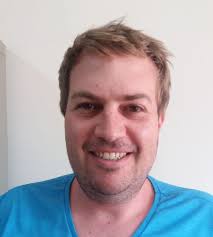
Espectroscopia de Emissão Óptica de Plasma Induzido por Laser: Conceitos, Calibrações e Aplicações*
Prof. Dr. Gustavo Nicolodelli – PPGFísica/UFSC
*Evento de presença obrigatória da disciplina seminários
Resumo:
A técnica de espectroscopia de emissão óptica de plasma induzido por laser (LIBS, do inglês, “Laser-Induced Breakdown Spectroscopy”) vem se tornando um popular método analítico nas últimas décadas. As principais vantagens são: aplicabilidade para vários tipos de amostras, com pouco ou nenhum preparo dessas, capacidade de sensoriamento remoto, rápida análise multi-elementar e maior rapidez no processo de análise. Recentes progressos no seu desenvolvimento a transformou em uma poderosa ferramenta de caracterização para diversos materiais, tais como amostras agrícolas, ligas metálicas, fármacos, alimentos, e tecidos biológicos, entre outras. O objetivo desta apresentação será introduzir os conceitos físicos básicos da técnica LIBS, desde o processo de formação do plasma até a identificação e quantificação dos elementos. Uma atenção especial será dada para o método Calibration-Free, que utiliza parâmetros do plasma para quantificação dos elementos presentas nas amostras. Por fim, serão exploradas várias aplicação da técnica, da Terra à Marte.
Data: 14 de maio de 2021 – (sexta-feira) – Horário: 10h15min
Link de acesso ao canal do programa no YouTube: https://youtu.be/4y80cjpZVZA
-
Evento do Grupo de Apoio à Saúde Mental: Por uma Pós-Graduação Saudável – É POSSÍVEL SER FELIZ NA PANDEMIA? Parte II
Convidamos para a realização de mais um evento promovido Grupo de Apoio à Saúde Mental (instituído pela Portaria Nº 5/2020/PROPG, de 04/12/2020), em conjunto com a PROPG.
Evento: “Por uma Pós-Graduação Saudável – É POSSÍVEL SER FELIZ NA PANDEMIA? Parte II”
Data: 11 de maio de 2021
Horário: das 18:00 as 19:30
O evento será transmitido pela TV UFSC, YouTube: https://youtu.be/lhrp9-HEAe8Contamos com vossa colaboração para divulgação ao corpo docente, discente e servidores técnicos administrativos do programa!

Como chegar
Contatos


Facebook Auto Publish Powered By : XYZScripts.com