
-
Seminário com o Prof. Dr. Antonio Tavares Costa Junior- 29 de maio de 2015 – 10h15min
O PROGRAMA DE PÓS-GRADUAÇÃO EM FÍSICA convida para o seminário:

Prof. do UFF/IF. Atua em pesquisas na área de Física da Matéria Condensada, sendo seus principais interesses de pesquisa: – Dinâmica de spin de sistemas nanoscópicos; – Transporte eletrônico em sistemas desordenados
Excitações de spin em sistemas nanoestruturados*
Prof. Dr. Antonio Tavares Costa Junior – UFF/IF
*Presença obrigatória para os alunos matriculados na disciplina seminários
Resumo:
Em sistemas ferromagnéticos as excitações de spin determinam várias propriedades importantes do sistema, tais como a relaxação da magnetização e a absorção de energia. Também estão associadas a fenômenos com grande potencial de aplicação tecnológica, como a geração de correntes puras de spin e a reversão do estado de magnetização de domínios magnéticos. Em metais as excitações de spin têm caráter bastante diverso daquelas presentes em isolantes magnéticos. Nesse seminário apresentarei a abordagem que desenvolvemos para o cálculo de excitações de spin em sistemas magnéticos nanoscópicos em contato com substratos metálicos não magnéticos. Ela incorpora naturalmente o caráter metálico do sistema e é capaz de descrever, em pé de igualdade, excitações em sistemas tão diversos quanto filmes ultrafinos e átomos adsorvidos a superfícies.
Data: 29 de maio de 2015 – Local: Sala 212 – Auditório do Departamento de Física – Horário: 10h15min
-
Seminário com o Francesca Gulminelli- 22 de maio de 2015 – 10h15min
O PROGRAMA DE PÓS-GRADUAÇÃO EM FÍSICA convida para o seminário:

University of Caen-Basse Normandie (France)
Sub-saturation equation of state for Core-Collapse Supernovae and Neutron Stars*
Francesca Gulminelli – LPC/Ensicaen and University of Caen (France)
*Presença obrigatória para os alunos matriculados na disciplina seminários
Resumo:
The construction of a realistic equation of state for dense matter as it can be found in core-collapse supernovae and neutron stars is a formidable task which is not yet completely achieved. The structure of very high density matter in the neutron star core is by far the most uncertain part of the EoS modeling. However, even in the least exotic regime of sub-saturation matter, where the degrees of freedom are purely nucleonic and relatively well-known, the presence of clustering due to the Coulomb quenching of the nuclear liquid-gas phase transition requires beyond mean-field methods properly treating all the complexity of nuclear structure, in a regime of neutron-rich matter where no experimental data exist to validate the available effective interactions.
Self-consistent mean-field approaches with realistic effective interactions are still routinously applied at zero temperature. This is justified thanks to the Wigner-Seitz structure of stellar matter, which reduces the thermodynamic limit to a single nucleus problem. However, a consistent treatment at finite temperature in principle implies beyond mean-field configuration mixing. This is presently a problem since existing models are either done in the single nucleus approximation, or do not recover the single-nucleus Wigner-Seitz limit of zero temperature.
In this talk we will present a density-functional formalism which, by introducing explicit cluster degrees of freedom, consistently describes the neutron-rich nuclei immersed in the gas of their continuum states in the inner crust, and the nuclear statistical equilibrium of different in-medium modified nuclear species in supernova matter. The influence of the effective interaction, and specifically the density dependence of the symmetry energy, will also be discussed.
Data: 22 de maio de 2015 – Local: Sala 212 – Auditório do Departamento de Física – Horário: 10h15min
-
Seminário com o João Evangelista Steiner – 15 de maio de 2015 – 10h15min
O PROGRAMA DE PÓS-GRADUAÇÃO EM FÍSICA convida para o seminário:
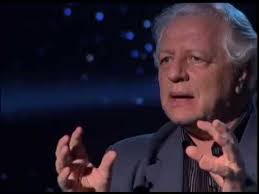
Professor titular do Instituto de Astronomia, Geofísica e Ciências Atmosféricas da USP. Possui experiência na área de Astronomia, com ênfase em Astrofísica Estelar e Núcleos Ativos de Galáxias.
Buracos negros ativos, inativos e múltiplos: um recenseamento*
João Evangelista Steiner – IAG/USP
*Presença obrigatória para os alunos matriculados na disciplina seminários
Resumo:
Buracos negros supermassivos parecem residir na maioria das galáxias de alta massa e em uma fração das galáxias de baixa massa. Ao capturar gás, esses objetos tornam-se luminosos e são chamados de núcleos ativos. Parte significativa dos núcleos de galáxias no Universo Local não mostra atividade nuclear, podendo ter buracos negros inativos (sem captura de gás), mais difíceis de serem detectados.
Estamos conduzindo um recenseamento dos núcleos de todas as galáxias brilhantes (B <12 mag) do Hemisfério Sul, utilizando espectroscopia de campo integral nos telescópios Gemini, para estudar, com precisão inédita, suas propriedades nucleares e circumnucleares. Os resultados preliminares indicam que: 1) Em galáxias massivas, núcleos ativos são ao menos duas vezes mais frequentes do que indicavam pesquisas anteriores; 2) Há uma fração significativa de objetos ativos de muito baixa luminosidade; 3) Encontramos núcleos fora do centro ou com estrutura múltipla com frequência inesperada; 4) Gás ionizado ou neutro está presente no centro de 97% das galáxias massivas.
Data: 15 de maio de 2015 – Local: Sala 212 – Auditório do Departamento de Física – Horário: 10h15min
-
Seminário com o Tiago José Nunes da Silva – 08 de maio de 2015 – 10h15min
O PROGRAMA DE PÓS-GRADUAÇÃO EM FÍSICA convida para o seminário:

Discente de PhD em Física na University of Groningen (Holanda)
Busca da Janela Conforme*
Tiago José Nunes da Silva – University of Groningen, RUG, Holanda
*Presença obrigatória para os alunos matriculados na disciplina seminários
Resumo:
Teorias de Calibre Não-Abelianas com um grande número de sabores exibem restauração de simetria conforme antes que liberdade assintótica seja perdida. Um dos cenários que tenta explicar como simetria conforme é restaurada é o cenário da Janela Conforme. Neste seminário eu irei introduzir o tema e reportar resultados recentes obtidos utilizando métodos de teoria de calibre na rede, um método não-perturbativo robusto para o estudo numérico de teorias de calibre.
Data: 08 de maio de 2015 – Local: Sala 212 – Auditório do Departamento de Física – Horário: 10h15min
-
Seminário com o Prof. Andy P. Monkman – 24 de abril de 2015 – 10h15min
O PROGRAMA DE PÓS-GRADUAÇÃO EM FÍSICA convida para o seminário:
Effect of singlet triplet recycling in the charge transfer state manifold and molecular geometry on thermally activated delayed fluorescence
Prof. Andy P. Monkman
Dept. of Physics, Durham University, South Road Durham, UK
Resumo:

Figure 1: Temperature dependent delayed fluorescence measurements of a near zero exchange energy ICT TADF
Detailed photophysical measurements of intramolecular charge transfer states have been made both in solution and solid state1. Temperature dependent emission and delayed emission are used to map the energy levels involved in molecule decay, and through detailed kinetic modelling of the thermally activated processes observed, true electron exchange energies and other energy barriers of the systems determined.
For specific donor acceptor molecular configurations, the CT singlet and triplet states are found to be the lowest lying excited states of the molecule with very small electron exchange energies = kT. In these cases the decay kinetics of the molecules become significantly different to normal molecules, and the effect of rapid recycling between CT singlet and triplet states is seen to greatly extend the lifetime of the ‘excited state’ and yield non-exponential decay. Quantum yields increase markedly, even though the intersystem crossing rate is fast, ? 109 s-1. The decay kinetics is found to be very sensitive to both temperature and sample inhomogeneity2, see figure 1. Temperature dependent delayed emission measurements reveal very different time domain behaviour and the effects of ICT emitter inhomogeneity is revealed. Clear evidence will be given to show that TADF reaches 100% efficiency at harvesting triplet states1,3, and device having > 15% EQE discussed.
We will then go on to show the results for an ICT molecule with highly controlled structure i.e. the donor and acceptor fragments are held rigidly orthogonal. In this molecule the CT states can clearly be seen to be the lowest energy states of the molecule with a very small exchange energy (singlet triplet gap). Here we find that there are substantial differences between optical and electroluminescent photophysics resulting in device being far more efficient than is suggested by the molecules PLQY. For the first time we can show that the PLQY of the emitter is not the figure of merit to use in a device, because the excited states are formed in a different way within the device which avoids a major excited state quenching mechanism. This will be discussed in a new molecule that has a PLQY of 30% but gives devices having >19% EQE.
TADF thus not only enables 100% of triplet states to be harvested, the charge transfer states which give rise to emission and TADF also enable more efficient singlet emission than ‘PLQY’ would lead us to believe.
References
1 V. Jankus, C. J. Chiang, F. Dias, and A. P. Monkman, Adv Mater 25, 1455 (2013).
2 F. B. Dias, K. N. Bourdakos, V. Jankus, K. C. Moss, K. T. Kamtekar, V. Bhalla, J. Santos, M. R. Bryce, and A. P. Monkman, Adv Mater 25, 3707 (2013).
3 D. Graves, V. Jankus, F. B. Dias, and A. Monkman, Adv Funct Mater 24, 2343 (2014).
4 Vygintas Jankus, Przemyslaw Data, David Graves, Callum McGuinness, Jose Santos, Martin R. Bryce, F. B. Dias, and A. P. Monkman, Advanced Functional Materials 24, 6178. (2014).
Data: 24 de abril de 2015 – (sexta-feira) – Local: Sala 212 – Auditório do Departamento de Física – Horário: 10h15min
-
Relato da 168ª Reunião Ordinária do Colegiado Delegado do Programa de Pós-Graduação em Física da UFSC
Caros usuários:
Segue abaixo o relato da 168ª Reunião Ordinária do Colegiado Delegado do Programa de Pós-Graduação em Física da UFSC, realizada no dia 13 de abril de 2015 – (segunda-feira), às 9h30min, na Sala 201 – Sala de Reuniões do Programa de Pós-Graduação em Física:
-
Seminário com o Stephen Patrick Walborn – 17 de abril de 2015 – 10h15min
O PROGRAMA DE PÓS-GRADUAÇÃO EM FÍSICA convida para o seminário:
Detection of quantum entanglement: experiments with spatially entangled photon pairs*
Stephen Patrick Walborn
Instituto de Física – UFRJ
*Presença obrigatória para os alunos matriculados na disciplina seminários
Resumo:
The twin photons produced by spontaneous parametric down-conversion have been an exceptional tool for the study of entanglement and quantum information. The spatial correlation of these photons was one of the first properties to be studied. Nevertheless, the convenient and efficient detection of quantum entanglement in the spatial variables is still an active area of research, with possible applications in quantum cryptography and communication. Here we present several experiments performed at the Quantum Optics Laboratory at the Instituto de Física, Universidade Federal do Rio de Janeiro. We present several novel experimental methods to detect the entanglement in the transverse spatial variables of photon pairs. Both methods use spatial light modulators to imprint an appropriate phase profile on the down-converted photons. Our first method uses this phase profile to measure the spatial correlation functions directly. With these, we can evaluate known entanglement witnesses in a more efficient fashion, without the need for a position-dependent detection system. Our second method uses complementary masks to discretize the detection system, again allowing for a more efficient identification of entanglement via a novel entanglement witness.
Data: 17 de abril de 2015 – Local: Sala 212 – Auditório do Departamento de Física – Horário: 10h15min
-
Convocação para a 168ª Reunião Ordinária do Colegiado Delegado
Memorando Circular n.º 004/2015/PPGFSC
Florianópolis, 9 de abril de 2015.
Aos Membros do Colegiado Delegado do Programa de Pós-Graduação em Física
Assunto: Convocação para a 168ª Reunião Ordinária do Colegiado Delegado
1.Convocamos Vossa Senhoria para a 168ª Reunião Ordinária do Colegiado Delegado do Programa de Pós-Graduação em Física da UFSC, a ser realizada no dia 13 de abril de 2015 – (segunda-feira), às 9h30min, na Sala 201 – Sala de Reuniões do Programa de Pós-Graduação em Física, do Departamento de Física, com a seguinte pauta:
-
Seminário com o Rogerio Rosenfeld – 10 de abril de 2015 – 10h15min
O PROGRAMA DE PÓS-GRADUAÇÃO EM FÍSICA convida para o seminário:
O Lado Escuro do Universo*

Diretor do IFT/UNESP, vice-diretor do ICTP South American Institute for Fundamental Research, presidente da comissão de área de Partículas e Campos da Sociedade Brasileira de Física e membro do Laboratório Interinstitucional de e-Astronomia
Rogerio Rosenfeld – Instituto de Física Teórica / UNESP
*Presença obrigatória para os alunos matriculados na disciplina seminários
Resumo:
Sabemos hoje que apenas 5% do Universo é composto de átomos. Nesse colóquio vou descrever brevemente o que pensamos que são os 95% restantes: matéria escura e energia escura.
Data: 10 de abril de 2015 – (sexta-feira) – Local: Sala 212 – Auditório do Departamento de Física – Horário: 10h15min
-
Defesa de tese de doutorado de Marcos João Correia – 9 de abril de 2015 – quinta-feira – Horário: 9h30min
O Programa de Pós-graduação em Física convida a todos para:
Defesa de Tese*
Marcos João Correia
ESTUDO DE NANOPARTÍCULAS MAGNÉTICAS ATRAVÉS DE SIMULAÇÕES COMPUTACIONAIS
*(evento de reposição da disciplina seminários)
Banca Examinadora:
Prof. Dr. Wagner Figueiredo – (Presidente) – FSC/UFSC
Prof. Dr. Walther Schwarzacher – (membro externo) – University of Bristol
Drª. Sueli Hatsumi Masunaga – (membro externo) – USP/IF
Prof. Dr. Nilton da Silva Branco – (membro titular) – UFSC/FSC
Prof. Dr. Lucas Nicolao – (membro titular) – UFSC/FSC
Prof. Dr. Marcelo Freitas de Andrade – (membro titular) – UFSC/Araranguá
Prof. Dr. Marcus Emmanuel Benghi Pinto – (membro suplente) – UFSC/FSC
Data: 9 de abril de 2015-quinta-feira- Horário: 9h30min – Local: Sala 212 – Auditório do Departamento de Física



Como chegar
Contatos


Facebook Auto Publish Powered By : XYZScripts.com